Experiential Learning
UNDERGRADUATE NUCLEAR SCIENCE CERTIFICATE
- Successfully complete 15 credit hours of the 18 credit hours available below.
REACTOR OPERATOR LICENSE
- Successfully complete CHEM 161 & 162
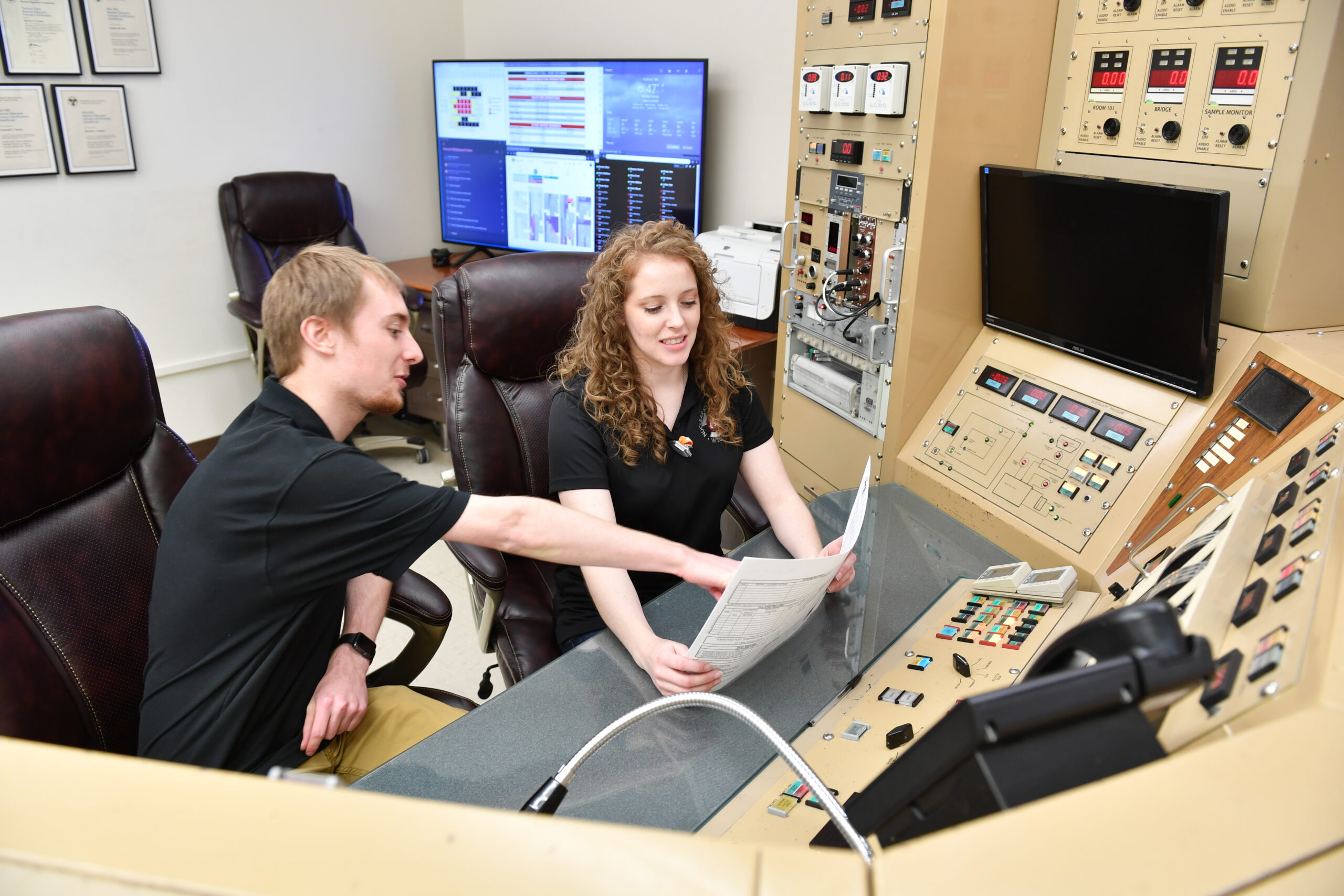
- Three hours of class and several hours of hands-on reactor operator training per week
- One-semester post-license period as a WSU student to serve as a reactor operator.
SENIOR REACTOR OPERATOR LICENSE
- Successfully complete CHEM 161, 162, & 262
- Three hours of class and several hours of hands-on reactor operator training per week.
Courses
CHEM 161: Nuclear Reactor Operations 1
Credits: 3, Fall Semester
Course Prerequisite: CHEM 101 or CHEM 105, which may be taken concurrently, or instructor permission.
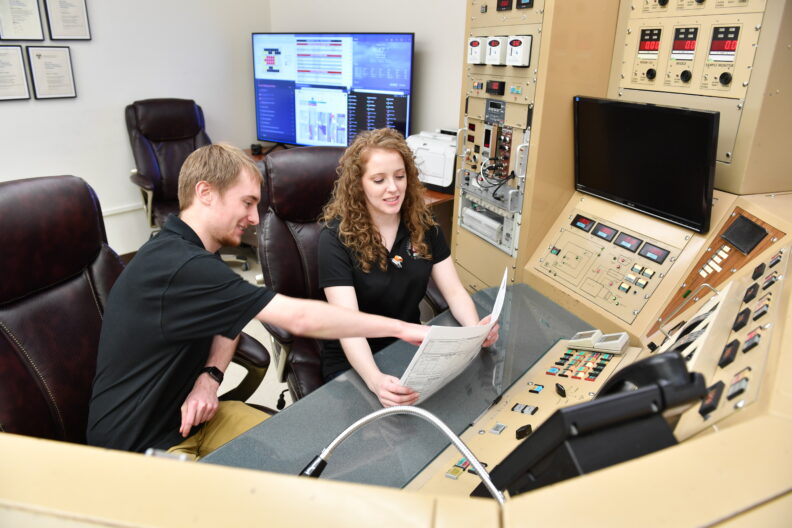
The primary objective of this course is to train the student to successfully complete the U.S. Nuclear Regulatory Commission licensing exam and obtain a U.S. NRC reactor operator license at the WSU 1.0 MW TRIGA reactor operated by the NSC after completion of the two-course series (CHEM 161 and CHEM 162). Nuclear Reactor Operations 1 (CHEM 161) is developed around nuclear science principles, nuclear reactor theory, and introductory reactor operations.
CHEM 162: Nuclear Reactor Operations 2
Credits: 3, Spring Semester
Course Prerequisite: CHEM 161 with a grade of C or better.
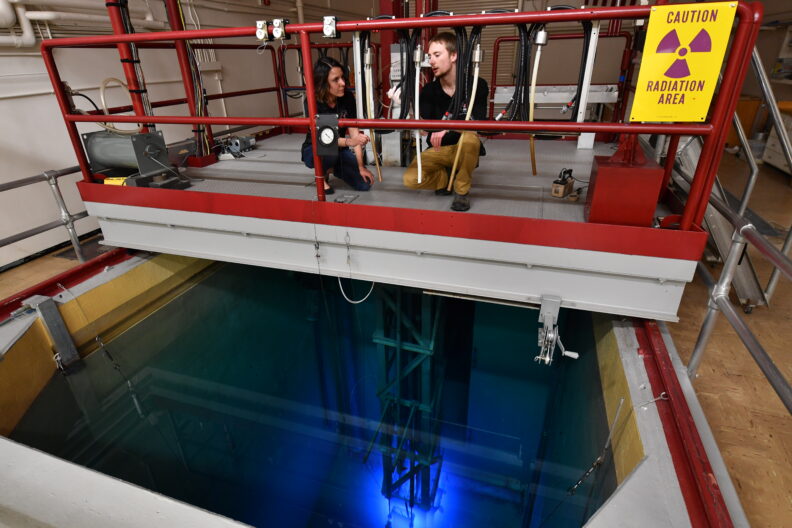
Nuclear Reactor Operations 2 is the second class in a three-part series necessary to demonstrate knowledge and skills required to obtain a nuclear reactor operator license for the WSU 1 MW TRIGA nuclear reactor. Nuclear Reactor Operations 2 (CHEM 162) represents continued knowledge development in nuclear reactor theory and in-depth reactor operations training and licensing. CHEM 162 will recap nuclear reactor theory from the previous course (CHEM 161), while introducing new topics specific to the WSU nuclear reactor including facility licensing, emergency planning, training, response, policies, and procedures.
CHEM 262: Senior Reactor Operations
Credits: 3, Spring Semester
Course Prerequisite: CHEM 162 with a grade of C or better.
Senior Nuclear Reactor Operations is a rigorous, in-depth course on facility design, reactor operations, safety analysis, nuclear design, risk assessment, regulatory considerations, and change management controls for the WSU 1 MW TRIGA reactor. CHEM 262 requires that the student has a firm grasp on all content covered in CHEM 161 and CHEM 162 and a reactor operator license for the WSU reactor prior to taking this course. The primary objective of this course is to train the student to successfully complete the U.S. Nuclear Regulatory Commission Senior Reactor Operator licensing exam and obtain a U.S. NRC senior reactor operator license at the WSU 1.0 MW TRIGA reactor operated by the NSC.
CHEM 265: Measurement of Radioactive Materials
Credits: 3, Spring Semester
Course Prerequisite: CHEM 161, and concurrent enrollment in CHEM 101, 105, or instructor permission.
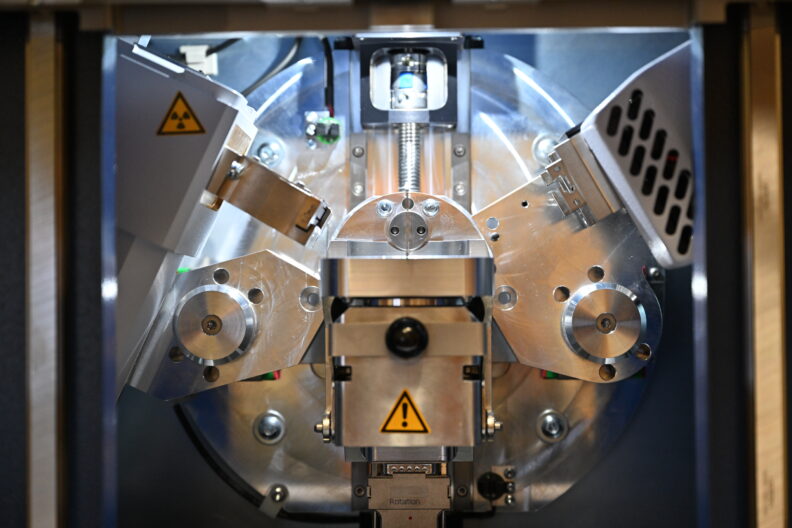
Focuses on the handling, characterization, and analysis of radioactive materials. Nuclear theory, nuclear physics, radiation safety, radiation detectors, alpha spectrometry, gamma spectrometry, separation and analysis of radionuclides, and nuclear forensics. The primary objective of this course is to train the student to work with radioactive materials and gain understanding on how to characterize and interpret the spectroscopic data of these materials.
CHEM 361: Health Physics & Radiation Shielding
Credits: 3, Fall Semester
Course Prerequisite: Concurrent enrollment in CHEM 101, 105, or instructor permission.
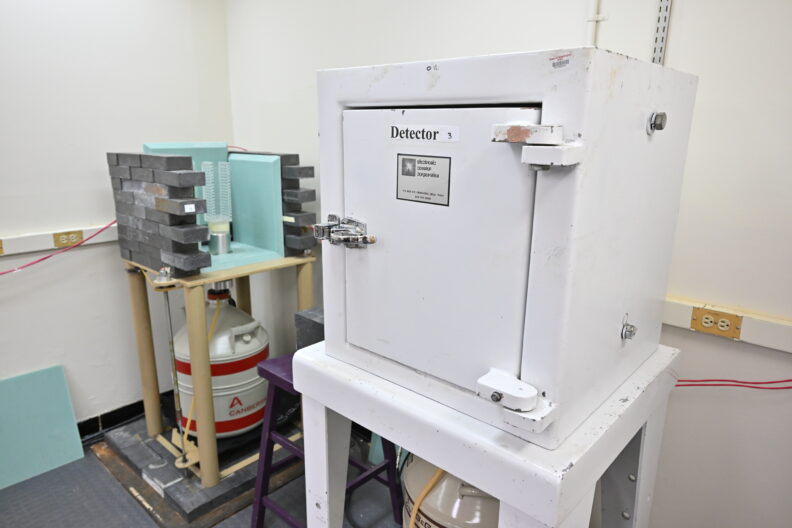
Focuses on the understanding of how ionizing radiation effects the environment and human body, with an emphasis on radiation safety. Atoms and energy, discoveries in radiation physics, interactions with matter, nuclear fission, naturally occurring radiation and radioactivity, environmental dispersion, radiation shielding, internal radiation does, nuclear criticality, statistics in radiation physics, and health physics scenarios.
CHEM 365: Radioanalytical Chemistry
Credits: 3
Course Prerequisite: CHEM 105 (General Chemistry), CHEM 220 (Quantitative Analysis), and CHEM 361 (Health Physics and Radiation Shielding).
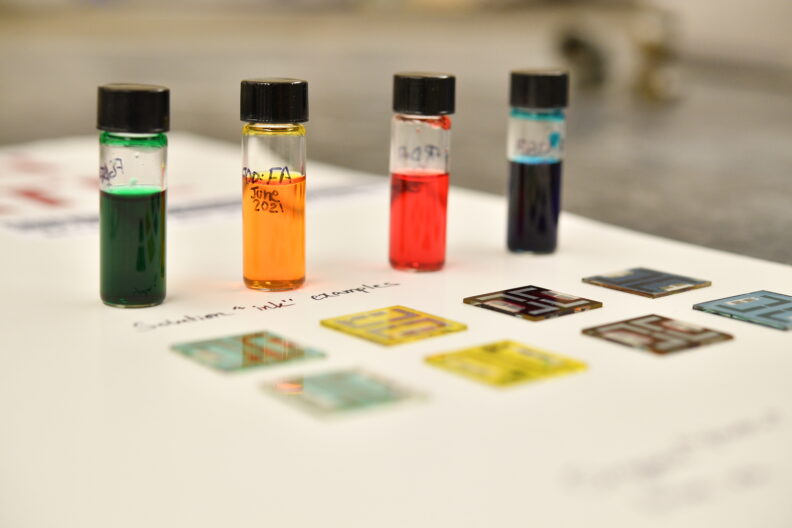
Focuses on the safe isolation and measurement of radioactive materials. Laboratory safety, radiation detection principles, analytical and radioanalytical chemistry principles, radioactive sample collection and preparation, applied radiation measurements, radionuclide identification, quality assurance, laboratory design and management principles, and chemistry beyond the actinides.